
Most weekly status updates are written for the writer, not the reader. They are exhaustive, chronological, and unranked. They have the structure of a confession. A confession is the wrong format for a workplace artifact your manager has eight of, every Monday morning.
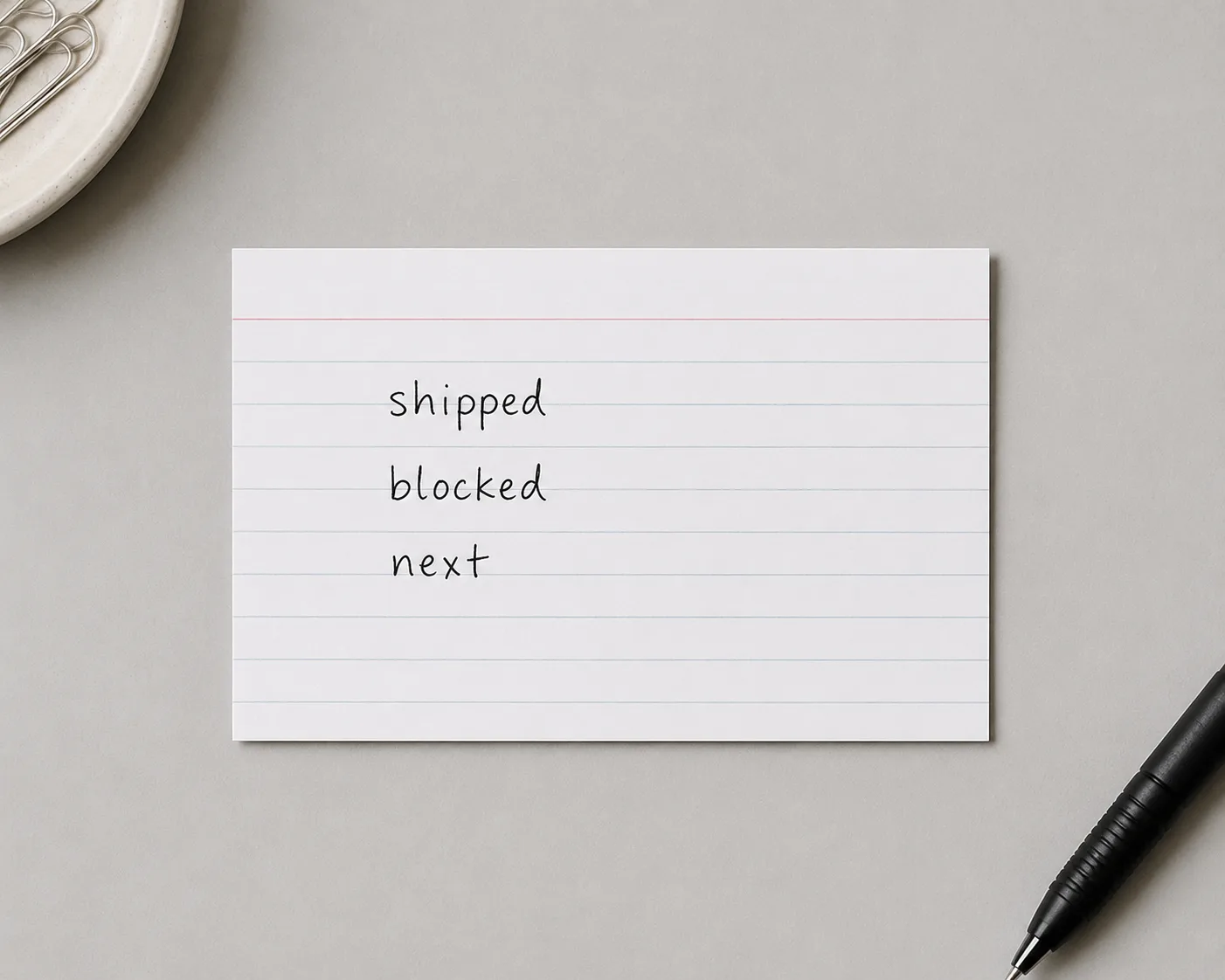
Try this instead. Three lines, in this order.
Line 1: Shipped
One sentence on what you actually completed since the last update. Not what you worked on. Completed. If nothing completed, write "Nothing shipped this week" and then explain why on line two.
Line 2: Blocked / Risks
One sentence on what's in your way, named. "Waiting on legal on the data-retention question" is useful. "Some stuff slowed down" is noise.
Line 3: Next
One sentence on what you'll ship next, with a concrete date if possible. The date is what separates a status update from a hope.
That's the whole template. Three lines. Forty seconds to write. Six seconds to read. Compounded across a year, it's the difference between a manager who knows what you're working on and a manager who has to guess.
If your team's culture demands more context, write the three lines first, then add. The discipline is in writing the headline before the elaboration.